Who Am I? The Woman Behind All the Roles
 Nadia Khan

A personal reflection on identity, expectations and finding yourself again without losing who you are.
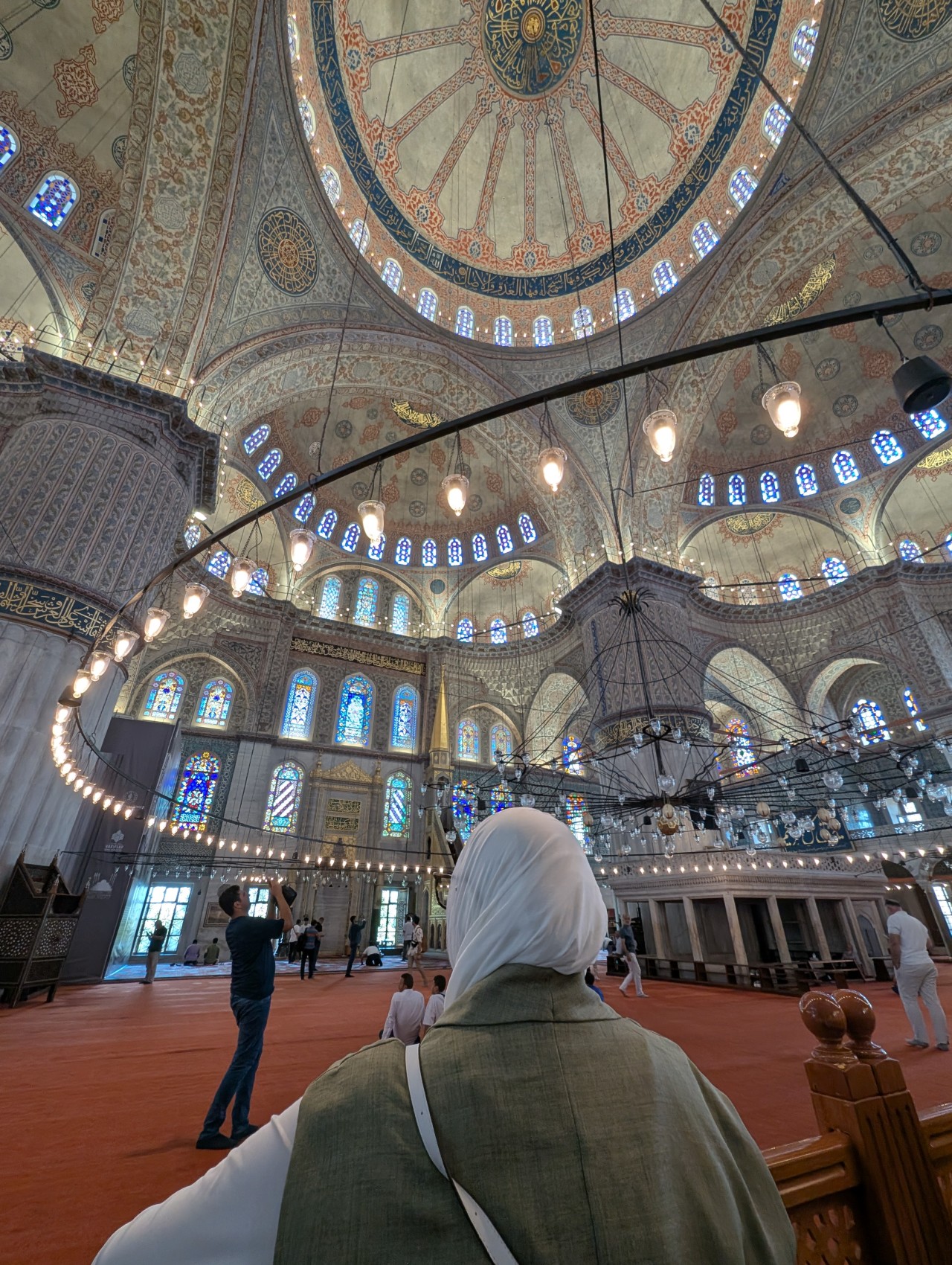
Assalamu Alaikum,
There was a point in my life when I went through an experience that changed me. It made me question who I was and, perhaps for the first time in a long time, I found myself asking, Who am I?
I did not feel like myself anymore. Looking back, I realised that for a long time I had been living a life shaped around other people. Their expectations, their needs, their opinions and, if I am honest, their approval. I had become so used to pleasing people and doing what was expected of me that sometimes I felt as though I was simply moving through life like a robot. Doing what needed to be done, being there for everyone else and trying to keep everyone happy, while somewhere along the way I had stopped asking myself what I wanted or what I needed.
It made me wonder how many other women feel the same way.
How many of us have spent years living according to the expectations of others without even realising it? From a young age, many of us are taught what it means to be a "good girl" and eventually a "good woman". We hear that good girls listen to their parents, good wives do what their husbands say, good daughters-in-law keep their in-laws happy and good mothers put their children first.
There is nothing wrong with being caring, respectful, loving and supportive. Our families matter, and the people we love matter. But I think sometimes the message gets lost along the way. We can become so focused on being everything to everyone else that we forget that we are a person too.
We learn to say yes when we really want to say no. We stay quiet when something hurts us because we do not want to cause an argument. We change the way we behave, the things we say and sometimes even the things we want because we are trying so hard to be accepted and loved.
And I think this can be particularly true in relationships. As women, we can sometimes put so much pressure on ourselves to be the woman we think our husband wants us to be. We try to be more understanding, more patient, more accommodating. We bend backwards to please, hoping that if we can just be the right kind of woman, we will be loved, appreciated and cared for in the way we need.
But what happens to us in the process?
Where do we go?
I have thought about this a lot, and one of the things that has become clearer to me is that I do not believe Islam asks women to lose themselves in order to be good women.
When I look at the life of the Prophet Muhammad ﷺ and the women around him, I see something very different from the idea that a woman has to make herself smaller in order to be a good woman.
Take Khadijah رضي الله عنها. Before she became the wife of the Prophet ﷺ, she was a successful and respected businesswoman. She employed the Prophet ﷺ to manage a trading journey because of his honesty and character, and it was through this that she came to know him. She was established in her own right, and she was the one who expressed her interest in marriage. Her identity, strength and success did not disappear when she became a wife.
And look at the way the Prophet ﷺ treated her. He valued her, respected her and never made her feel that she needed to become less in order to be his wife. Even after her death, he continued to remember her with love and spoke of her kindness and support.
Then there was Aisha رضي الله عنها, who was not simply known as the wife of the Prophet ﷺ. She became a scholar in her own right. People came to her for knowledge, and generations of Muslims learnt from her. She had a voice, she had knowledge and she was not afraid to ask questions or express her views.
And Umm Salamah رضي الله عنها showed incredible resilience through some of the most difficult experiences a person can face. She endured separation from her husband and child during their migration and continued to hold onto her faith. She was also a woman whose wisdom was valued and whose counsel was sought.
These women were not all the same. They had different personalities, different strengths and different experiences. But none of them had to erase themselves to be good Muslim women.
When I look at the life of the Prophet ﷺ, I also see kindness, affection and respect in the way he treated the women in his life. He showed love towards his daughters. He would stand for Fatimah رضي الله عنها and welcome her with warmth and respect. He helped his family in the home, spent time with his wives, joked with them and showed them affection.
This matters to me because it challenges some of the ideas we can grow up believing about what it means to be a woman.
Being a good wife does not mean becoming invisible.
Being a good daughter does not mean having no voice.
Being a good mother does not mean that you cease to exist as an individual.
And being a good Muslim woman does not mean that you have to give up your identity, your strengths, your dreams or your personality.
We can love others deeply without losing ourselves.
We can care for others and care for ourselves.
We can love our families without losing our identity. We can respect our parents without believing that we have no voice. We can be loving wives without becoming invisible. We can be devoted mothers while remembering that our own wellbeing matters too.
And we can have dreams, opinions, feelings and boundaries.
I think sometimes society, culture and this dunya can make us feel that we have to be a certain way. There is a picture of what a good woman is supposed to look like, how she is supposed to behave and what she is supposed to tolerate. We can spend so much time trying to fit into that picture that we stop asking whether it is actually right for us.
But perhaps we need to pause and question some of those expectations.
Not everything we have been taught is necessarily Islam. Sometimes it is culture. Sometimes it is family expectations. Sometimes it is simply what has been passed down from one generation to another.
And perhaps one of the most important things we can do is learn to tell the difference.
You have a voice.
I believe that voice should be heard.
You are allowed to have an opinion. You are allowed to have feelings. You are allowed to have dreams and aspirations. You are allowed to say no. You are allowed to have boundaries. You are allowed to change and grow.
None of that makes you selfish or means that you love your family any less.
Sometimes change is not about becoming someone completely different. Sometimes it is about finding your way back to yourself.
Back to the parts of you that became quiet because everyone else's needs seemed more important. Back to the dreams you put aside. Back to the woman you were before you became so busy trying to be everything that everyone else needed you to be.
That life-changing experience made me ask myself, Who am I?
I am still discovering the answer.
But perhaps that is the point. We do not have to have all the answers. We are allowed to grow, to learn, to change and to discover ourselves at different stages of our lives.
And perhaps finding yourself is not about becoming someone new at all.
Perhaps it is about coming back to the woman Allah created you to be.
A woman who can love deeply without losing herself.
A woman who can care for others without abandoning her own needs.
A woman who can be a good daughter, mother, wife, sister and friend without forgetting that she is also a woman with her own voice, identity and dreams.
Maybe it is time we stopped asking ourselves how we can become everything everyone else wants us to be and started asking a different question:
Who am I, and who do I want to become?
Perhaps that is where the journey back to ourselves begins.