App Ki Izzat; But What About Hers?
 Nadia Khan

App Ki Izzat has sparked conversations about marriage, respect, ego and women’s self-worth. But whose izzat are we really protecting?
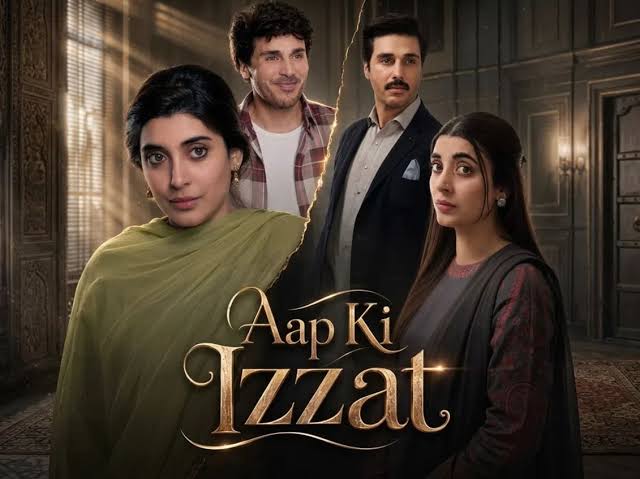
Everyone seems to be talking about App Ki Izzat.
The acting. The characters. The storyline. The conversations it has started in homes, WhatsApp groups and across social media.
And I can understand why.
There are dramas you watch and then move on from. Then there are dramas that make you pause because, somewhere between the storyline and the uncomfortable conversations, you recognise pieces of society that are actually very real.
For me, App Ki Izzat is one of those dramas.
Even the title makes you think.
“App ki izzat.”
Your honour. Your respect. Your reputation.
But whose izzat are we actually talking about?
Because so much of what the drama highlights is the importance placed on a man's izzat. His reputation. His status. His ego. How he is perceived by other people.
And when that ego is threatened, how far will a man go to protect it?
Sometimes it is not even what he does.
It is what he begins to believe he is entitled to do.
And that is where things become uncomfortable.
Because what about hers?
What about a woman's izzat?
When her izzat becomes his
There is something deeply uncomfortable in the way women are often taught that their izzat is tied to the men in their lives.
She is her father's izzat.
Then her husband's izzat.
Then the family's izzat.
But where is her own?
What happens when the very person who is supposed to protect her dignity becomes the person who chips away at it?
The drama shows this in so many ways.
Sometimes through the bigger betrayals.
But sometimes through the things that are dismissed as jokes.
A comment here.
A humiliation there.
A joke made at her expense.
And we are expected to laugh because it was “only a joke”.
But repeated disrespect does something to a person.
It chips away at confidence. It makes you question yourself. It can make you start accepting things you would once have said were completely unacceptable.
And perhaps one of the most painful forms of disrespect is what happens when a woman grows older while her husband becomes more financially secure, more successful and more socially established.
Suddenly, the woman who stood beside him when he had very little is no longer seen as the woman who helped build the life he now enjoys.
Instead, she becomes too old.
Too ordinary.
Perhaps no longer socially appropriate for the world he now wants to inhabit.
He wants someone younger. Someone who fits the image he now has of himself.
And I cannot help but ask:
What could be more damaging to a woman's sense of izzat than being told, directly or indirectly, that she was good enough for the struggle but not good enough for the success?
She was there when there was nothing.
She helped build him.
She supported him emotionally.
She held the family together.
She raised the children.
She tried to please his mother.
She adjusted.
She compromised.
She gave.
And then, when he finally reaches the place he wanted to reach, he looks around and decides he wants someone else beside him.
That is not simply heartbreak.
It is a profound form of disrespect.
The woman who gave everything
What struck me most about the woman's story is how easily a woman's contribution can disappear when it is not attached to a payslip.
We talk about what a man provides financially.
But what about everything she provided while he was building his career?
The emotional support.
The home.
The children.
The compromises.
The constant adjustments.
The relationships she maintained.
The sacrifices nobody put a monetary value on.
And perhaps the most painful part is that even the person she tried so hard to please could turn against her.
How many women know this feeling?
Trying to be the good daughter-in-law.
The good wife.
The good mother.
The woman who keeps everyone happy.
People pleasing can look like kindness from the outside.
But sometimes, underneath it, is a woman slowly disappearing.
She keeps asking:
“What do they need from me?”
Instead of:
“What do I need?”
And there is a difference.
The years nobody sees
There is another part of the story that I think is so important.
The years of silence.
The years of trying.
The years of swallowing things.
The years of adjusting, forgiving, hoping things will change and telling yourself to keep going.
And then one day, she breaks.
But what do people see?
They see her reaction.
They see her anger.
They see the way she finally speaks.
They see what she does when she can no longer contain everything inside.
And suddenly, that becomes the story.
“She has changed.”
“Look how she is behaving.”
“Why did she do that?”
“Look what she has done.”
But what about everything that came before?
What pushed her to that point?
What happened in all those years that nobody noticed?
What did she keep quiet about?
What did she tolerate?
How many times did she try to have the conversation before she eventually stopped trying?
This is something I think we need to be much more compassionate about when we look at women.
Sometimes we judge the reaction without asking what caused it.
We see the explosion but not the pressure that built up underneath it.
We see the one day she finally walks away, but not the years she spent trying to stay.
And I am not saying every reaction is right simply because someone has been hurt. We are still responsible for our actions.
But understanding someone's behaviour is not the same as excusing it.
There is a difference between asking, “Why did she react like that?” and simply deciding that she is the problem because of how she reacted.
Sometimes a woman does not suddenly become angry.
Sometimes she has been carrying anger for years.
Sometimes she has been silent for so long that when she finally finds her voice, it comes out with everything she has been holding inside.
And perhaps we need to stop asking only, “What did she do?”
And start asking:
“What happened to her?”
That question changes everything.
When money becomes power
The drama also says a lot about money.
Money can provide comfort. It can provide opportunities. But when money becomes a tool for control, everything changes.
We see this in the relationship with the children too.
The father has something tangible to offer.
Money.
Things.
Status.
Access.
And children can easily associate those things with love and importance.
The parent who says yes. The parent who buys. The parent who provides financially.
Can appear to hold more power.
Yet the drama also shows something else.
When the mother is no longer there, everything begins to unravel.
Because there are things money cannot buy.
The emotional labour of a mother.
The invisible work.
The comfort.
The routine.
The person who knows who needs what without being asked.
The person who has quietly been holding everyone together.
Sometimes we only recognise someone's value when their presence is removed.
And then there is religion
This is another part I found particularly uncomfortable.
Religion should be a source of guidance, accountability and humility.
Yet how often do we see religion being used selectively?
A religious teaching is remembered when it benefits us.
Forgotten when it challenges us.
Used to justify what we already want.
Used to silence someone else.
Used when convenient.
But faith is not meant to be a tool we pick up when it suits our argument and put down when it does not.
If we genuinely believe in Allah, then our behaviour towards people matters.
How we speak matters.
How we treat our spouse matters.
How we treat someone who can no longer benefit us matters.
How we behave when nobody is watching matters.
You cannot use faith to demand respect while refusing to give it.
You cannot talk about a woman's responsibilities while ignoring a man's responsibilities.
And you cannot use religion to protect your desires while ignoring the principles that challenge those desires.
That is not faith.
That is using faith to serve the self.
But what about the women who pursue married men?
This part raises another difficult conversation.
Because the responsibility for protecting a marriage does not belong only to the married man.
There are women who know a man is married.
They know he has children.
They know there is another woman whose life will be affected.
And yet they pursue him anyway.
I genuinely struggle with this.
How can one woman knowingly walk towards the destruction of another woman's family?
What has happened to our respect for one another as women?
Yes, ultimately, the married man is responsible for his own choices. But I also believe we need to have an honest conversation about female responsibility.
We cannot keep telling women to support women while simultaneously ignoring the women who knowingly become involved with married men.
And sometimes the attraction is not even about love.
It is about what the man represents.
Money.
Status.
Security.
Connections.
Lifestyle.
Social standing.
Again, we come back to the question of izzat.
What are we willing to compromise for the things we desire?
The impossible woman men are sometimes expected to find
Perhaps one of the biggest contradictions the drama exposes is the impossible standard placed on women.
A man may want a woman who stays at home.
She keeps the house.
Raises the children.
Looks after his parents.
Supports him.
Builds him up.
Keeps everyone happy.
Does not complain.
Does not ask for too much.
She is expected to hold the family together.
But then, when he becomes financially successful, the expectations can suddenly change.
Now he wants a woman who is socially confident. Someone who can walk into a business dinner. Someone who can hold conversations with influential people. Someone who looks a certain way. Someone he feels proud to “show”. Someone who fits the world he has entered.
And I have to ask:
Why could the woman who helped you get there not be valued in that world too?
Why was she good enough for the difficult years but not the successful ones?
Why should she have to change to remain worthy of love?
And perhaps more importantly:
Why does her worth become dependent on whether she still fits his idea of what is socially desirable?
What happens to a woman's confidence?
There is another thread running through all of this.
Self-respect.
Confidence.
Self-worth.
When someone repeatedly tells you, directly or indirectly, that you are not enough, eventually you can start believing them.
That is why self-respect matters so much.
Not the loud kind.
Not the kind where you prove a point to everyone.
The quiet kind.
The kind that says:
I know who I am.
I know what I bring.
I know what I will and will not accept.
I know that getting older does not make me less worthy.
I know that being a mother does not erase me as a woman.
I know that my husband's success does not define my value.
I know that someone's rejection does not determine my worth.
And perhaps most importantly:
I know that I do not have to abandon myself to keep somebody else happy.
So whose izzat are we protecting?
Maybe this is the real question the drama leaves us with.
When we say App Ki Izzat, whose izzat are we protecting?
The man's reputation?
The family's reputation?
Society's opinion?
Or the woman's dignity too?
Because a woman's izzat is not simply about how modestly she dresses, how obedient she is, how well she keeps a home or whether she remains married.
Her dignity is also in how she is spoken to.
How she is treated.
Whether her sacrifices are recognised.
Whether her voice is heard.
Whether she is respected when she is no longer young.
Whether she is valued when she has nothing material to offer.
Whether she is allowed to have an identity beyond wife, mother, daughter and daughter-in-law.
Whether she is loved as a person, rather than for what she does for everyone else.
And perhaps this is why so many women are connecting with the drama.
Because underneath the storyline are conversations many women have had quietly for years.
About feeling invisible.
About giving too much.
About people pleasing.
About betrayal.
About ageing.
About comparison.
About money.
About marriage.
About affairs.
About losing yourself while trying to keep everyone else happy.
And ultimately, about learning that love without respect is not enough.
A woman can love deeply and still need boundaries.
She can forgive and still choose herself.
She can be a devoted wife and still have an identity of her own.
She can be a mother and still be a woman with dreams, needs and desires.
She can respect her husband without surrendering her self-respect.
And she can believe in Allah while also recognising that she has been given dignity, worth and an individual identity of her own.
Perhaps there is another part of this conversation we do not talk about enough.
Where does our izzat actually come from?
Because if we make another person the source of our worth, we are giving them a huge amount of power over us.
A husband can change.
A marriage can change.
Children grow up and create lives of their own.
People can disappoint us. They can leave us. They can betray us. They can stop appreciating everything we have done for them.
Someone we made our whole world can suddenly make us feel like we were never enough.
And this is why we have to be careful about making another person our everything.
Because no human being can carry that place.
No husband can be your entire identity.
No child can be your entire purpose.
No relationship can be the source of all your worth.
Only Allah can hold that place.
We can love people deeply. We can honour our marriages. We can adore our children. We can give generously to those we love.
But our ultimate dependence, our deepest trust and our sense of worth have to return to Allah.
When we understand that, something begins to change.
We can love without losing ourselves.
We can give without completely emptying ourselves.
We can care without constantly seeking approval.
We can forgive without accepting repeated disrespect.
And we can walk away from what harms us without believing that our life has lost its meaning.
Our izzat was never meant to rest in another person's hands.
People may fail to see our worth.
Allah does not.
And perhaps that is the izzat we need to protect most.
Not simply the izzat that society talks about.
Not a man's reputation.
Not the family's image.
Not what people will say.
But the dignity Allah has given us.
Maybe that is what App Ki Izzat has made me think about.
Not just “What is your izzat?”
But...
“Do you know where your izzat truly comes from?”
And perhaps when a woman understands that, she begins to come back to herself.
Not through someone else's eyes.
Not through her husband's approval.
Not through her children's validation.
Not through society's definition of what makes a woman worthy.
But through the knowledge that Allah created her, knows her, sees her and her worth was never dependent on another person's ability to recognise it.
And that, perhaps, is where her journey back to herself begins.